In my nine years handling motor insurance claims, I’ve heard every excuse under the sun. "I’d only had one," "I’m a better driver when I’m relaxed," and the classic: "I feel fine." Here’s the cold, hard truth from the desk of an ex-claims handler: your subjective feeling of 'fineness' means absolutely nothing to a police officer at the roadside, and even less to a loss adjuster trying to void your policy.
Whether you’re on prescription medication, managing a chronic condition, or just tired after a long shift, the gap between *feeling* capable and *being* capable is where lives are ruined and insurance claims are denied. Let’s strip away the fluff and look at what actually happens when the rubber meets the road.

Understanding Section 5A: The "Strict Liability" Trap
Most drivers think drug-driving laws are based on impairment—that is, the police have to prove you were wobbling about or driving erratically. If you are stopped for a basic offence, like a faulty tail light, and a roadside swab comes back positive, that is not the case for Section 5A offences.
Section 5A of the Road Traffic Act 1988 introduced the concept of "strict liability" for specified controlled drugs. This means the law doesn't necessarily have to prove you were impaired; it only has to prove that the drug was in your system above a specified limit. If your blood tests show 2.1µg of THC per litre of blood, the law considers you over the limit. Period. There is no "I felt fine" defence for that specific reading.
The THC Limit: Why is it so low?
The UK limit for THC (the psychoactive component of cannabis) is set at 2 micrograms (µg) per litre of blood. Many people argue this is "too low" or "unscientific." From an underwriting and roadside enforcement perspective, the limit isn't designed to measure 'highness'—it’s designed to provide a threshold where the average person’s cognitive processing starts to lag.
The Roadside Reality: Unlike alcohol, which has a predictable burn-off rate, THC metabolites can linger in your system long after the psychoactive effects have worn off. You might feel stone-cold sober, but if you’re pulled over, that tiny concentration—which is significantly lower than alcohol limits—can lead to a disqualification, a criminal record, and the immediate cancellation of your motor insurance.
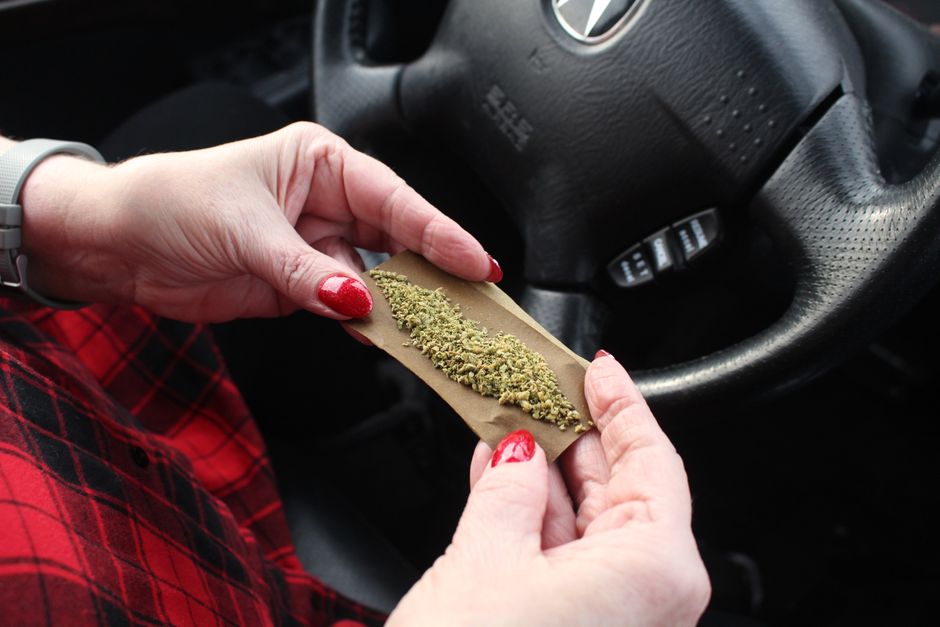
The Medical Defence: A False Sense of Security
I cannot stress this enough: having a prescription is not a "get out of jail free" card.
Yes, there is a "medical defence" for prescribed drugs under Section 5A. However, to rely on it, you must prove three things: the drug was prescribed by a registered practitioner, it was taken in accordance with their instructions, and it was not taken for the purpose of getting 'high.' Even then, if the police believe your driving was impaired, you can still be prosecuted under Section 4 (driving whilst unfit through https://bizzmarkblog.com/the-motorists-guide-to-medical-cannabis-dvla-rules-section-5a-and-staying-legal/ drugs), regardless of whether you’re under the limit or have a prescription.
Scenario Legal Status Insurance Implication Over the 2µg limit, no prescription Criminal Offence (Section 5A) Policy voided; claim refused. Over the limit, valid prescription Conditional Defence High risk; claim potential dispute. Under the limit, but impaired Criminal Offence (Section 4) Insurance likely voided for non-disclosure.Self-Check Before Driving: Moving Beyond "I Feel Fine"
If you aren't sure if you are safe to get behind the wheel, stop using your intuition. Your brain is a terrible judge of its own impairment—it's the same organ that tells you "just one more drink won't hurt." Use this checklist mindset instead.
1. Subtle Impairment Signs
Impairment isn't always slurred speech. It’s the small stuff that happens before you hit a lamppost:
- Peripheral Vision Check: Are you struggling to track movement on your left or right side? If your focus is "tunneling," do not drive. The Clock Test: Look at an analogue clock. If it takes you more than a split second to register the time, your cognitive processing speed is compromised. The Mirror Sweep: Can you check your three mirrors in a fluid, automatic motion, or do you have to consciously remind yourself to do each one? If you’re manually 'forcing' observation, you’re too slow.
2. The Reaction Time Test
You don't need a lab. You need a simple "ruler drop" test. Have someone hold a 30cm ruler just above your open hand. They drop it without warning, and you try to catch it. If you’re consistently catching it near the bottom (20cm+ mark), your reaction time is significantly slower than your baseline. If you can’t catch it, you can’t hit the brake in time when a pedestrian steps into the road.
3. The "Instruction Check"
If you are taking medication, read the patient information leaflet. If it says "may cause drowsiness" or "do not operate heavy machinery," that is your legal warning. If you ignore it and crash, your insurer will categorize that as "failure to take reasonable care." They won't pay out, and you’ll be left personally liable for the other party's damage.
Disclosure: The Boring Stuff That Hurts
Many drivers forget that their insurance policy is a contract of "utmost good faith." If you have a medical condition—or are taking medication that the DVLA requires you to notify them about—and you don't, you are in breach of contract.
Check the DVLA list: Don't guess. If your condition is on their "must notify" list, you have a legal obligation to tell them. Update your insurer: If the DVLA says you are fit to drive with conditions, you must inform your insurer. If you don't, and you have an accident, they will check your medical records during the claim investigation. If they find an undisclosed condition, they will void your policy. The Roadside Disclosure: If you are on prescription cannabis or other strong medication, keep a copy of your prescription in the glovebox. It doesn't prevent a blood test, but it shows the officers you are a compliant patient, not someone seeking to evade the law.Conclusion: The "Boring" Truth
Road safety isn't about being a "skilled driver." It’s about being a *consistent* one. When you are under the influence of substances—legal or otherwise—your consistency evaporates. You might be fine 99 times out of 100, but the one time you aren't, the legal and financial fallout will be life-changing.
My advice? If you have to ask yourself "am I safe to drive?", the answer is almost certainly "no." Put the keys down, call a cab, and save yourself the nightmare of a criminal prosecution and a voided insurance policy. The roadside is a cold place to find out that your definition of "fine" doesn't match the law's definition of "fit."